
Education Programs
At Northern Colorado Wildlife Center, education is at the heart of our mission.
We believe that sharing knowledge…
Fosters appreciation of our wild neighbors.
Promotes peaceful coexistence and prevents human-wildlife conflicts.
Strengthens the bond between people and wildlife.

Program Types

Outreach Booths
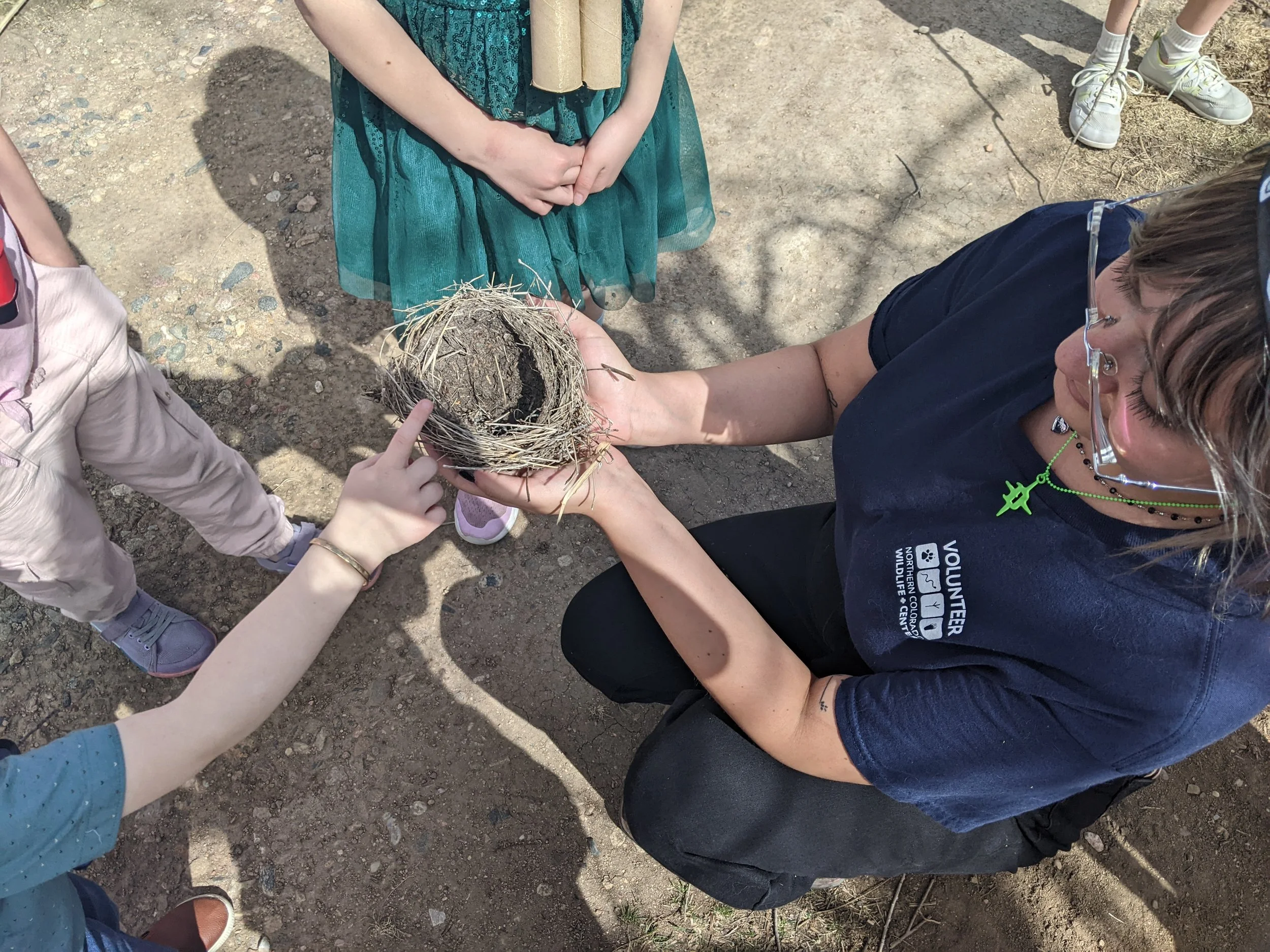
What’s included? We will provide a booth featuring an educational setup with displays, interactive activities, and live animal ambassadors.
Target Audience: All ages! Ideal for fairs, festivals, and community events.
Location: Booths are at your chosen location. Locations that are more than 10 miles from our center have additional travel costs.
Presentations
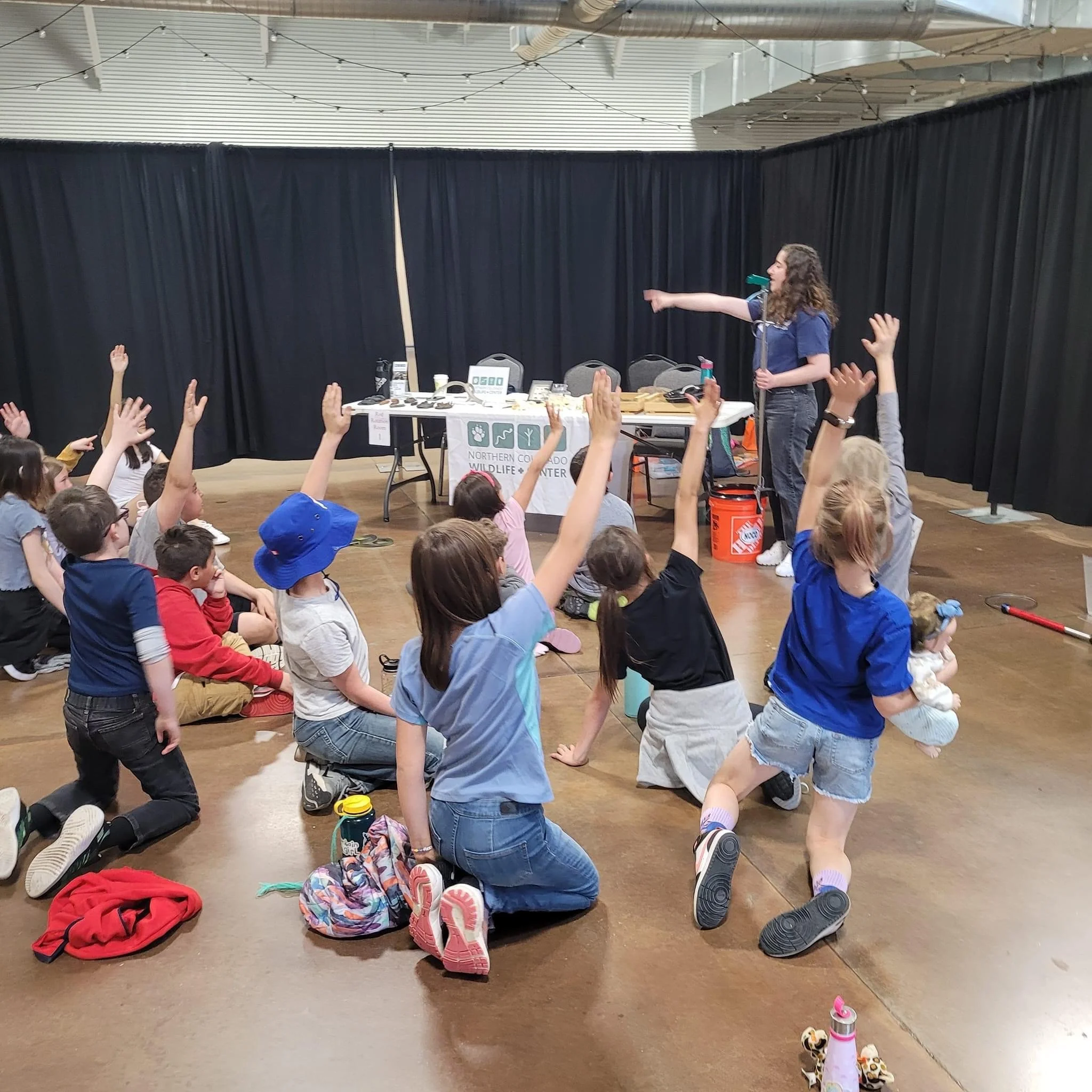
What’s included? A structured talk on a specific topic. All presentations include 2 live animal ambassadors and age-appropriate, hands-on activities.
Target Audience: We cater our presentations to age/grade level. We offer presentations for all ages, from preschoolers to senior citizens. Great for schools, libraries, senior centers, homeschool groups, and scout troops.
Location: Come to us or we’ll come to you! Please note: our center’s maximum participant capacity is 30 people.
*Custom presentations are available for an additional fee.
Standard Presentations
PreK-Kindergarten
-
Discover the animals that live in your own neighborhood and learn what every animal needs to survive.
Students will:
Identify basic needs of animals
Recognize local wildlife
Practice respectful wildlife observation
Standards: SC.P.2.1, SC.P.2.2
-
Meet live invertebrate ambassadors and explore how these animals survive, grow, and support life all around us.
Students will:
Identify that insects and other invertebrates are living organisms with specific needs.
Recognize basic insect body parts (head, thorax, abdomen) and other key features of invertebrates.
Practice respectful observation and handling expectations for living organisms
Standards: SC.P.2.1, SC.P.2.2
Grades 1-2
-
Explore the diverse ecosystems of Colorado and discover how different animals are perfectly adapted to life in forests, grasslands, rivers, and even urban environments.
Students will:
Define what a habitat is and identify its basic components (food, water, shelter, space).
Compare major Colorado habitats from grasslands to glaciers.
Recognize how human activity can impact habitats and the wildlife that depend on them.
Standards: SC.1.2.1, SC.1.2.2
-
Take your students on an exciting journey into the world of wild animal families! Through captivating stories, real animal artifacts, engaging visuals, and hands-on activities, students will discover how animal parents care for, protect, and teach their young the skills they need to survive.
Students will:
Compare baby animals to their parents.
Explore how different animal families thrive in habitats around the world.
Standards: SC.1.1.2, SC.2.4.1
Grades 3-5
-
Every organism plays an important role in keeping ecosystems healthy! In this interactive lesson, students will investigate how plants, animals, and decomposers are connected through food webs and the cycling of matter.
Students will…
Discover how organisms depend on one another and their environment to survive.
Explore predator-prey relationships.
Learn how environmental shifts can affect entire ecosystems.
Standards: LS.3.4.3. LS.4.1.1, LS.5.2.1
-
All about amazing animal adaptations!
Why do owls have silent flight? How do snakes smell with their tongues? Why are some animals camouflaged while others have sharp claws or powerful beaks? In this exciting, hands-on lesson, students will discover the incredible adaptations that help animals survive in the wild.
Students will…
Investigate animal adaptations by observing how physical structures and behaviors help animals survive.
Analyze evidence to explain how inherited traits and environmental factors influence survival.
Construct evidence-based explanations for why some organisms are better suited to certain habitats.
Standards: LS.3.3.1, LS.3.4.2, LS.3.4.3, LS.4.1.1, LS.4.2
Middle School (grades 6-8)
-
Adaptation, Behavior & Survival
Why do animals build nests, migrate, camouflage, or perform elaborate courtship displays? Students will investigate the fascinating behaviors and adaptations that increase an organism's chances of survival and reproduction.
Students will…
Explore how inherited traits, learned behaviors, and environmental conditions influence growth, reproduction, and long-term survival.
Students will use scientific evidence to explain how organisms are uniquely suited to their environments.
Standards: LS.MS.1.4, LS.MS.1.5
High School
(grades 9-12)
-
Explore the science and decision-making behind wildlife rehabilitation. This program goes beyond the rescue story to examine the medical care, ecological reasoning, and ethical considerations involved in helping injured and orphaned wildlife recover and return to the wild.
Students will:
Explain the scientific process used in wildlife rehabilitation from intake to release.
Analyze how anatomy, physiology, and behavior influence treatment and recovery outcomes.
Evaluate ethical considerations involved in wildlife care and management decisions.
Identify human-caused factors that contribute to wildlife injury or displacement.
Why do we charge for educational programming?
Our education programs require a fee to help support the costs of providing high-quality wildlife education. These fees cover essential expenses such as animal care, program materials, transportation, and staff time, ensuring we can continue offering engaging and informative experiences. As a nonprofit, every dollar goes directly toward sustaining our mission of wildlife conservation, rehabilitation, and education. Your support allows us to reach more people, inspire stewardship, and make a lasting impact on our local wildlife and ecosystems.
When our team has reviewed your request, they will reach out with more information including pricing.
Questions About Education Programs?
Fill out the form and we’ll get back to you soon!